About Plate Heat Exchanger
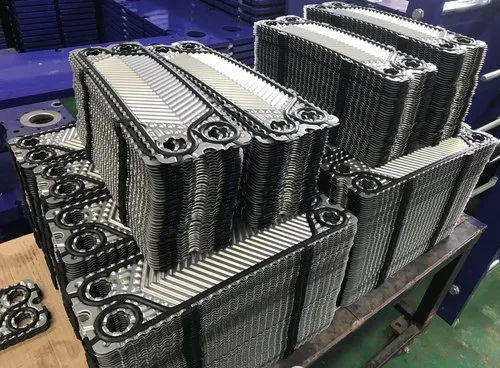
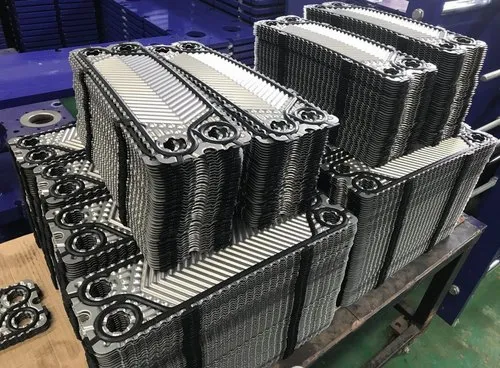
PHE Plates is the part of Plate Heat Exchanger by its size heating surface increase or decrease.
PHE PLATE - 304,316L
SMO 254,904L
TITANIUM
HAST-C-276 C-2000
NICKEL- 200/201
TI-PDi
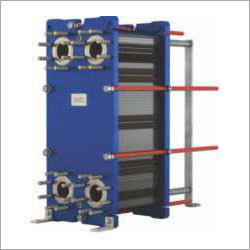
Versatile Industrial PerformanceOur gasketed plate heat exchangers are engineered for versatility across HVAC, food, chemical, pharmaceutical, dairy, and marine sectors. They withstand rigorous conditions owing to superior stainless steel plate construction and customizable features, making them suitable for diverse industrial processes.
Customizable and Scalable DesignAdaptable to a range of requirements, these heat exchangers can be tailored from 10 to 300 plates and up to 500 kW capacity. Flexible options for connection diameters (DN25 to DN100), heat transfer areas, and flow rates enable you to select the exact model for your operational needs.
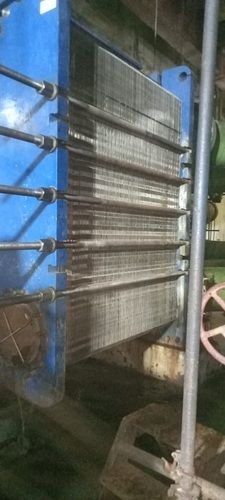
Easy Maintenance and LongevityThe gasketed plate structure allows fast assembly and disassembly, reducing downtime during cleaning and maintenance. With materials chosen for high corrosion resistance, the exchangers assure long service life and hygienic operation, even under demanding temperatures and pressures.
FAQ's of Plate Heat Exchanger:
Q: How does a plate heat exchanger work in industrial applications?
A: A plate heat exchanger transfers heat between two fluids without mixing them, using a series of thin, corrugated stainless steel plates. The fluids flow in alternate channels, separated by gaskets (EPDM, Nitrile, or Viton), maximizing heat transfer efficiency and supporting various industrial processes.
Q: What are the benefits of using stainless steel (AISI 304/316) and premium gaskets in these exchangers?
A: Stainless steel plates provide excellent corrosion resistance, durability, and hygiene, making them suitable for demanding environments like pharmaceuticals, food, and marine industries. Using premium gaskets ensures reliable sealing, chemical compatibility, and operational longevity at high pressures and temperatures.
Q: Where can these plate heat exchangers be installed?
A: They are designed for vertical installation in a wide range of settings, including HVAC systems, food and beverage plants, chemical processing facilities, dairy production units, pharmaceutical operations, and marine vessels, thanks to their versatile and robust construction.
Q: What is the process for maintaining and cleaning the plate heat exchanger?
A: Maintenance is straightforward due to the gasketed plate structure. The exchanger can be easily disassembled, allowing individual plates to be inspected, cleaned, or replaced. This keeps downtime minimal and ensures ongoing optimal performance in high-demand environments.
Q: When should I consider customizing the number of plates or connection types?
A: Customization is recommended when you have specific requirements for heat transfer capacity, flow rate, or installation space. Adjusting the number of plates or choosing between threaded and flanged connections helps tailor the unit for exact performance and integration with your existing systems.
Q: What industrial advantages does this plate heat exchanger offer compared to tubular types?
A: Plate heat exchangers offer a larger heat transfer area within a compact footprint, higher thermal efficiency, easy maintenance, and are better suited for applications requiring frequent cleaning or plate modifications-making them ideal for industries with stringent hygiene and process flexibility needs.





 Send Inquiry


 Send Inquiry
 Send Inquiry
 Send SMS


